
Tag: forex trading

  • Best Forex EA 2026: Top Expert Advisors Ranked & Reviewed

    Best Forex EA 2026: Top Expert Advisors Ranked & Reviewed

    Search “best forex EA” and you’ll wade through a swamp of fake screenshots, rented Lamborghinis, and robots promising 1,000% a year. Let’s be blunt before we rank anything: there is no magic EA that prints money. The best expert advisors are tools. They can give you an edge when configured properly and run with disciplined risk management. Even then, none are risk-free.

    With that honesty established, some EAs are far better than others. This guide explains how to separate a credible expert advisor from a scam, the criteria that actually predict performance, and the top forex EAs worth considering in 2026.

    First: how to spot a scam EA

    Before any ranking, learn the filter that protects your money. The single most important factor in choosing the best forex EA is whether the developer provides real, verified live trading statistics — not backtests, not screenshots, but a third-party-verified live track record (typically on Myfxbook or FX Blue).

    Red flags that should make you walk away:

    • Backtest-only results. A flawless backtest with no verified live record usually means overfitting.
    • Guaranteed returns or “no-loss” claims. Markets don’t work that way.
    • Hidden strategy. If the EA won’t explain its logic, assume it’s a martingale or grid bot that doubles down on losers until it blows up.
    • Review-incentive ratings. Even high MQL5 scores can be inflated by review incentives, so weigh them carefully.

    Pass an EA through this filter first. Most fail it.

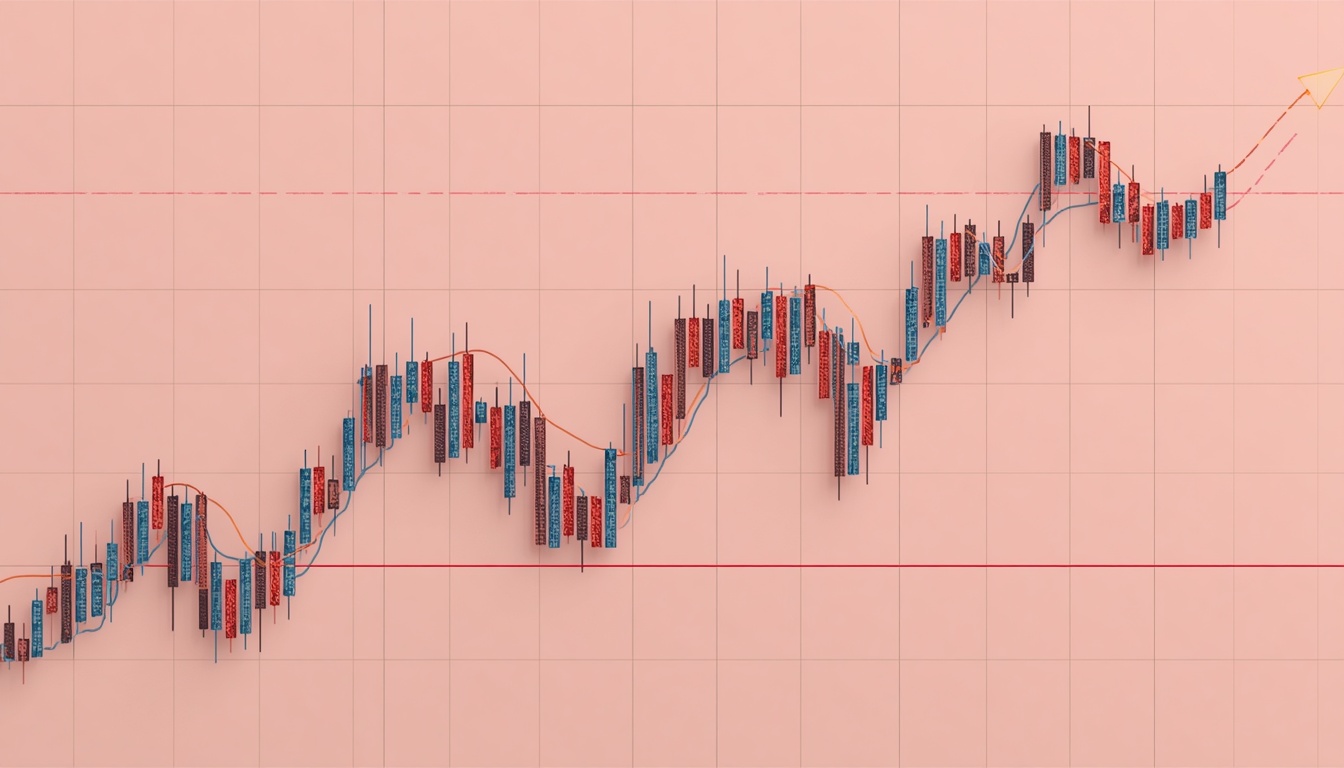
    A MetaTrader chart running an expert advisor with a verified Myfxbook track record, illustrating the best forex EA

    How we evaluate the best forex EA options

    The EAs below are framed around the criteria that genuinely predict real-world performance, drawn from how the major EA rating services rank them: verified live performance first, then drawdown and risk managementlength of track recordtransparency of strategy, and platform compatibility (MT4/MT5). Note that we’re describing categories and contenders, not promising any of them will profit for you — configuration, broker, and market conditions all matter.

    At a glance: top expert advisors

    EAKnown forModelWatch-out
    Forex Gold InvestorBalanced, verified resultsOne-time purchaseGold-focused volatility
    Happy GoldLongest track record (since 2013)PaidPast results ≠ future
    Quantum QueenHighest MQL5 rating (4.98)PaidRatings can be incentivized
    Dark Venus / Dark DioneTeam-backed, VIP supportPaid + communityDione carries higher volatility

    Forex Gold Investor — most balanced

    Forex Gold Investor is frequently cited as the most balanced option among popular EAs. Its appeal is a combination retail traders rarely get: a one-time purchase (no endless subscription), solid verified results, and a strategy that’s relatively straightforward to understand.

    Focused on gold (XAU/USD), it benefits from that market’s strong trends but also inherits its volatility, so position sizing matters. For traders who want a transparent, fairly priced EA with a real track record, it’s a sensible starting point.

    Happy Gold — longest track record

    Track record length matters because surviving many market regimes is itself evidence. Happy Gold stands out for having one of the longest histories among active EAs, with a record stretching back to 2013.

    A decade-plus of live operation doesn’t guarantee future profit — nothing does — but an EA that has weathered multiple cycles is inherently more credible than a six-month wonder with a glossy backtest. Treat longevity as a meaningful, if imperfect, signal of robustness.

    Quantum Queen — highest-rated (with caveats)

    Quantum Queen carries the highest user rating on MQL5 (4.98/5) with strong community feedback. That makes it one of the most visible EAs of 2026.

    The caveat is important and we’ll state it plainly: MQL5 ratings can be influenced by review incentives, so a near-perfect score isn’t proof of performance. Use the rating as a starting point for research, not a verdict. Demand the verified live record before trusting any capital to it — the same standard you’d apply to any EA.

    The Dark Venus series — team-backed

    The Dark Venus series suits traders who want a tested setup with ongoing support. Dark Venus leads for those who value a team-backed product with continued development and a VIP community, while its sibling Dark Dione has shown the strongest early live results — though it also carries the most volatility of the group.

    That volatility trade-off is the lesson in miniature: higher early returns usually come with bigger swings. Match the variant to your risk tolerance, not to whichever number looks biggest.

    What the best forex EA can and can’t do

    It helps to set expectations precisely, because the marketing never does.

    A good EA can do several real things. It can execute a tested strategy without emotion, around the clock, far faster than you could by hand. It can enforce risk rules you’d be tempted to override in the moment. And it can free you from staring at charts during the London and New York sessions. Those are genuine, valuable benefits.

    A good EA cannot do the things the scams promise. It can’t guarantee profit. It can’t adapt to a market regime it was never designed for. And it can’t turn a losing strategy into a winning one — it only executes faster. The best forex EA is a disciplined executor of a sound plan, nothing more and nothing less.

    This framing protects you. Once you accept that an EA is a tool and not an oracle, the absurd claims become easy to dismiss, and the realistic question takes over: does this EA execute a strategy with a genuine, verified edge? That’s the only question worth asking.

    Free vs paid EAs

    You’ll find both free and paid expert advisors, and price alone tells you little about quality.

    Free EAs are great for learning. You can study the code, see how a strategy is built, and test it on a demo account at zero cost. The risk is that free EAs are often abandoned, unsupported, or — worse — hide a martingale strategy that looks fine until it blows up. Paid EAs may come with support, updates, and (sometimes) a verified track record, but the price tag is no guarantee of profit; plenty of expensive EAs are overfit junk.

    The deciding factor is never the cost. It’s the verified live track record and the transparency of the strategy. A free EA with a real, public Myfxbook history beats a $500 black box every time. Judge the evidence, not the invoice.

    Realistic returns from a forex EA

    Let’s anchor expectations, because this is where EA buyers get hurt most. The ads show 50% months. Reality is quieter.

    A solid, well-run EA targets modest, compounding returns. Think low single digits to maybe low double digits per month in good conditions, with losing months mixed in. Any EA advertising consistent 30%, 50%, or 100% monthly gains is either curve-fit to the past or an outright scam. High advertised returns almost always hide high risk — usually a martingale that’s one bad streak from zero.

    Drawdown matters as much as return. An EA that makes 8% a month but periodically draws down 40% is far more dangerous than one making 3% with a 10% max drawdown. The second is something you can actually live with and keep running. The first will scare you into switching it off at the worst moment. When you read an EA’s verified track record, look at the depth of its drawdowns first, returns second.

    Treat the realistic picture as good news, not bad. A genuine EA returning a steady few percent a month, compounding over years, is a real edge most traders never achieve. The fantasy numbers are the trap. The modest, durable ones are the goal.

    How to deploy an EA safely

    Owning a good EA is half the battle; running it well is the rest.

    1. Verify the live track record on Myfxbook before buying.
    2. Backtest it yourself on quality data, including spreads and slippage.
    3. Demo-trade it for weeks on your broker — execution differs between brokers.
    4. Start on a small live account with conservative lot sizes.
    5. Use a VPS so the EA runs 24/5 without your computer being on, and monitor it.
    6. Kill-switch rules: set a max drawdown at which you turn it off, no exceptions.

    An EA is not “set and forget.” It’s a tool you supervise.

    FAQ

    What is the best forex EA in 2026? There’s no single best — it depends on your risk tolerance and broker. Forex Gold Investor is often cited as the most balanced for its one-time purchase and verified results, but every EA must be validated against its live track record.

    Are forex EAs profitable? They can be, when configured properly and run with strict risk management — but none are risk-free or guaranteed. Most EAs sold online fail the verified-live-results test entirely.

    How do I know if an EA is a scam? Demand third-party-verified live results (Myfxbook/FX Blue). Walk away from backtest-only proof, guaranteed-return claims, or any EA that hides its strategy.

    Do I need a VPS to run an EA? Strongly recommended. A VPS keeps the EA running 24/5 with low latency, independent of your home computer, which matters for consistent execution.

    Is a one-time-purchase EA better than a subscription? Not inherently, but a one-time purchase avoids recurring costs eating into returns. Judge by the verified track record and transparency first, pricing model second.

    What return should I expect from the best forex EA? Realistically, modest compounding returns — low single digits to maybe low double digits per month in good conditions, with losing months mixed in. Any EA advertising consistent 30%+ monthly gains is almost certainly overfit or a scam.

    Do EAs work on MT4 or MT5? Both. EAs are written in MQL4 for MT4 or MQL5 for MT5. New development increasingly targets MT5 for its faster backtesting and multi-asset support, but plenty of proven EAs still run on MT4.

    How much does a good forex EA cost? Prices range widely — from free community EAs to one-time purchases of a few hundred dollars to monthly subscriptions. Price is a poor quality signal on its own. A free EA with a verified live track record beats an expensive black box, so judge the evidence before the invoice.

    Do I need a VPS to run a forex EA? It’s strongly recommended. A VPS keeps your EA running 24/5 with low latency, independent of whether your home computer is on or connected. For consistent execution — especially around active sessions and news — a cheap VPS is one of the best small investments an EA trader can make.

    Key takeaways

    • There is no magic EA — the best forex EA is a tool that needs proper configuration and risk management.
    • Demand verified live results; backtest-only proof and guaranteed returns are red flags.
    • Top contenders include Forex Gold Investor (balanced), Happy Gold (longevity), Quantum Queen (popular, with rating caveats), and the Dark Venus series.
    • A long track record is a meaningful, imperfect signal of robustness.
    • Deploy on a VPS, demo first, start small, and set a hard drawdown kill-switch.

    Want to vet EAs like a pro? Our free Algo Trading Starter Kit includes an EA due-diligence checklist, a Myfxbook verification guide, and our broker and prop-firm comparison. Grab it free → and never buy a robot on a screenshot again.
  • The Grid Trading Strategy That Works in Any Market

    The Grid Trading Strategy That Works in Any Market

    Imagine a strategy that doesn’t care whether the market goes up or down — one that quietly profits from the simple fact that prices wiggle. No predictions. No staring at charts trying to call the next move. Just a ladder of orders that buys low and sells high, over and over, while you do something else. That’s the promise of the grid trading strategy, and it’s why it has become one of the most popular automated approaches for crypto and forex traders in 2026.

    The promise is real — but so are the caveats. This walkthrough shows you exactly how the grid works, a worked example with real numbers, and the honest truth about the markets where it prints versus the ones where it bleeds.

    What this guide covers

    The core idea in one paragraph

    Grid trading places a series of buy and sell orders at fixed price intervals above and below a starting price. Together they form a grid. As the price oscillates, it triggers buys on the way down and sells on the way up. Each swing locks in a small profit. The magic is that you never have to predict direction — you only need the price to move. Volatility, usually the trader’s enemy, becomes the fuel.

    A price chart overlaid with evenly spaced buy and sell order lines, illustrating the grid trading strategy

    How the grid trading strategy works

    Picture a price hovering around $100. You define a range — say $90 to $110 — and slice it into evenly spaced levels every $2. At each level you place an order: buys below the current price, sells above it.

    When the price drops to $98, your buy order fills. When it climbs back to $100, the matching sell order fires, and you pocket the $2 spread. The price falls again, you buy again, it rises, you sell again. Each completed round trip banks a small, mechanical profit. The grid trading strategy turns a choppy, sideways market — the kind that frustrates trend traders — into a steady series of payouts.

    A bot handles all of this. Once you set the range, the spacing, and the order size, the software places and replaces orders around the clock. As B2Broker explains, this hands-off, rules-based execution is precisely what makes grids so popular for automation.

    A worked example with real numbers

    Numbers make it click. Let’s run a simple forex grid on EUR/USD.

    • Range: 1.1800 to 1.2000
    • Grid spacing: every 50 pips
    • Order size: a fixed lot at each level

    A geopolitical headline drags the pair down to 1.1850, filling your buy order there. Two days later, positive economic data pushes it back up to 1.1950, triggering the sell. That round trip nets roughly 100 pips of profit — without you predicting a single thing about the news.

    Now multiply that. In a market that chops between 1.1800 and 1.2000 for three weeks, the same grid might complete a dozen of these round trips. None individually impressive; together, a meaningful return. That compounding of small, repeatable wins is the entire appeal of the grid trading strategy.

    The three types of grids

    You can tune a grid to your market view:

    • Neutral grid — buys and sells balanced around the price, built for sideways, range-bound markets. The classic, lowest-opinion version.
    • Bullish grid — weighted toward accumulating on dips and selling into strength, for markets you expect to drift upward.
    • Bearish grid — weighted toward selling rallies and covering on dips, for markets you expect to grind lower.

    Beginners should start neutral. It makes the fewest assumptions and best demonstrates how the mechanics behave before you add a directional bias.

    Where the grid trading strategy shines

    Grids are at their best when three conditions line up:

    • Range-bound, choppy markets. Sideways price action that punishes trend followers is exactly what feeds a grid.
    • High-liquidity assets. Forex majors and large-cap crypto fill orders cleanly and keep spacing predictable.
    • Frequent volatility. The more the price oscillates within your range, the more round trips you bank.

    This is the kernel of truth behind “works in any market” — because it doesn’t need a trend, a grid keeps working in the flat, directionless conditions where most other strategies stall.

    Where it breaks down

    Now the honesty the marketing skips. A grid’s great weakness is a strong, sustained trend.

    Say the price breaks out of your range and keeps running one direction. The grid keeps filling orders on the losing side. It buys all the way down in a crash, or sells all the way up in a rally. Either way, you accumulate an ever-larger underwater position. The “works in any market” claim quietly fails exactly here.

    Two more costs bite. First, transaction costs: a grid fires many trades, and spreads plus commissions skim a little off every one. Second, margin pressure: holding multiple open positions demands capital, and an aggressive grid on a small account can hit a margin call fast. Respect these, or the strategy that felt like free money turns expensive.

    Tuning the grid: range, spacing, and size

    Three dials control a grid, and how you set them decides everything.

    The range is the price band you expect the asset to stay inside. Set it too narrow and a normal swing escapes it. Set it too wide and your capital spreads thin across levels that rarely trigger. The usual anchor points are recent support and resistance — the prices where the asset has reversed before.

    The spacing is the gap between orders. Tight spacing means more frequent, smaller round trips and more transaction costs. Wide spacing means fewer, larger wins but longer waits between fills. In a calm market you tighten the grid; in a volatile one you widen it so noise doesn’t churn your account with fees.

    The order size is how much you commit at each level. This is your risk dial. Smaller sizes let you cover more levels and survive a move against you. Larger sizes amplify both the profit and the danger. Beginners almost always start too large — resist it.

    There’s no single “best” setting. The right grid matches the asset’s typical volatility, and the only honest way to find it is to backtest and paper trade before risking real money.

    The grid trading strategy across crypto, forex, and stocks

    The same mechanics behave differently depending on where you deploy them.

    Crypto is the natural home of the grid trading strategy. Coins swing constantly, exchanges offer built-in grid bots, and large-cap pairs like BTC and ETH provide the liquidity grids need. The flip side is that crypto also produces violent trends — exactly the condition that hurts a grid most.

    Forex is the other classic fit. Major pairs are deeply liquid and often range for extended stretches, especially in quiet sessions. Leverage is widely available, which magnifies both the small wins and the breakout risk.

    Stocks and commodities can work too, but they trend more persistently and carry session gaps that can jump straight over your levels. Grids here demand wider ranges and more caution. Wherever you run it, the rule holds: the grid trading strategy wants chop, not conviction.

    Common grid trading mistakes to avoid

    Most grid blowups trace back to the same handful of errors:

    • No stop-loss. The single most common and most expensive mistake. Without a cap, a breakout turns a working grid into a growing loss.
    • A range built on hope. Setting the band to where you wish the price would stay, instead of where it actually trades.
    • Grids on trending assets. Running a neutral grid on something in a strong, established trend fights the strategy’s core weakness head-on.
    • Over-leverage. Stacking too many levels with too much size, leaving no margin buffer for an adverse move.
    • Ignoring fees. On a tight grid, transaction costs can quietly eat most of the profit. Always model them before going live.

    Grid trading vs buy-and-hold

    It’s worth asking why you’d run a grid at all instead of simply buying and holding. The answer comes down to what each approach is built for.

    Buy-and-hold bets on direction. You profit only if the asset rises over your holding period, and you ride out every dip along the way. It’s simple, cheap, and powerful in a long bull market — but it does nothing in a market that goes sideways for months.

    A grid bets on movement. It harvests the sideways chop that buy-and-hold sleeps through, turning a flat market into a stream of small wins. The trade-off is that it caps your upside: in a roaring bull run, a grid will sell its position too early and underperform a holder who simply sat tight.

    So they suit opposite conditions. Buy-and-hold wins the strong trends; the grid trading strategy wins the range. Many traders run both — holding a core position while a grid works a separate slice of capital on the swings. Neither is “better” in the abstract. The market you expect decides which one earns its keep.

    Setting up your first grid

    If you want to try it without learning to code, platforms like Pionex and 3Commas offer built-in grid bots. Start with these guardrails:

    1. Pick a range-bound, liquid asset — a forex major or a large-cap coin, not an illiquid token.
    2. Set a sensible range around recent support and resistance, not wishful extremes.
    3. Use conservative spacing and small order sizes so you can survive a breakout.
    4. Add a stop-loss outside the grid to cap the trend risk that kills grids.
    5. Paper trade first, then start small with money you can afford to lose.

    That stop-loss step is the one most beginners skip — and it’s the difference between a bad week and a blown account.

    FAQ

    Is the grid trading strategy profitable? It can be in range-bound, volatile markets, banking many small wins. In a strong trend it can lose steadily, so profitability depends heavily on matching it to the right conditions and using a stop.

    Does grid trading really work in any market? Mostly. It excels in sideways, choppy markets and keeps working where trend strategies stall — but a strong sustained breakout is its weak point. Treat “any market” as “any range-bound market.”

    What markets is grid trading best for? Highly liquid, frequently oscillating assets: forex majors and large-cap cryptocurrencies are the classic choices, though it’s also used on stocks and commodities.

    How much money do I need for a grid bot? Enough to hold several open positions comfortably. Undercapitalized grids face margin pressure quickly, so start small and conservative rather than maxing out levels.

    Do I need to code to run a grid? No. Grid bots are built into platforms like Pionex and 3Commas, making this one of the most beginner-accessible automated strategies.

    Key takeaways

    • The grid trading strategy profits from price swings, not predictions — volatility is the fuel.
    • It places laddered buy and sell orders across a range and banks the spread on each round trip.
    • It shines in range-bound, liquid, volatile markets and keeps working where trend strategies stall.
    • Its weakness is a strong sustained trend, plus transaction costs and margin pressure.
    • Always add a stop-loss outside the grid — it’s the safeguard beginners most often forget.

    Want to launch your first grid the safe way? Our free Algo Trading Starter Kit includes a grid-bot setup checklist, the range-and-spacing worksheet we use, and our vetted platform comparison. Download it free → and turn market noise into a plan instead of a gamble.