
Tag: crypto trading

  • Crypto Scalping Bot Strategy: A 2026 Beginner’s Guide

    Crypto Scalping Bot Strategy: A 2026 Beginner’s Guide

    Somewhere right now, a piece of software is opening and closing a Bitcoin position in under a second, pocketing a fraction of a percent, and doing it again. And again. Hundreds of times a day. That’s a crypto scalping bot at work — and it’s one of the most seductive ideas in automated trading. Tiny wins, stacked endlessly, into something big. The dream sells itself.

    The reality is more demanding. A crypto scalping bot can absolutely make money, but the margin between profit and loss is razor-thin, and it’s decided by two unforgiving forces most beginners ignore: fees and latency. This guide shows you how scalping actually works, walks through the brutal math, and tells you honestly what it takes to come out ahead.

    What this guide covers

    What crypto scalping actually is

    Scalping is the art of taking many small profits instead of a few big ones. A scalper doesn’t care where Bitcoin will be next month. It cares where the price will be in the next thirty seconds, and it tries to capture a sliver of that move — 0.2%, maybe 0.5% — before exiting and hunting the next one.

    Crypto is a natural home for this. It trades 24/7, it’s volatile, and its order books update constantly, so there are always tiny dislocations to exploit. No human can scalp effectively, though. The trades are too fast and too frequent. This is automation’s territory by necessity, not preference, which is exactly why the crypto scalping bot exists.

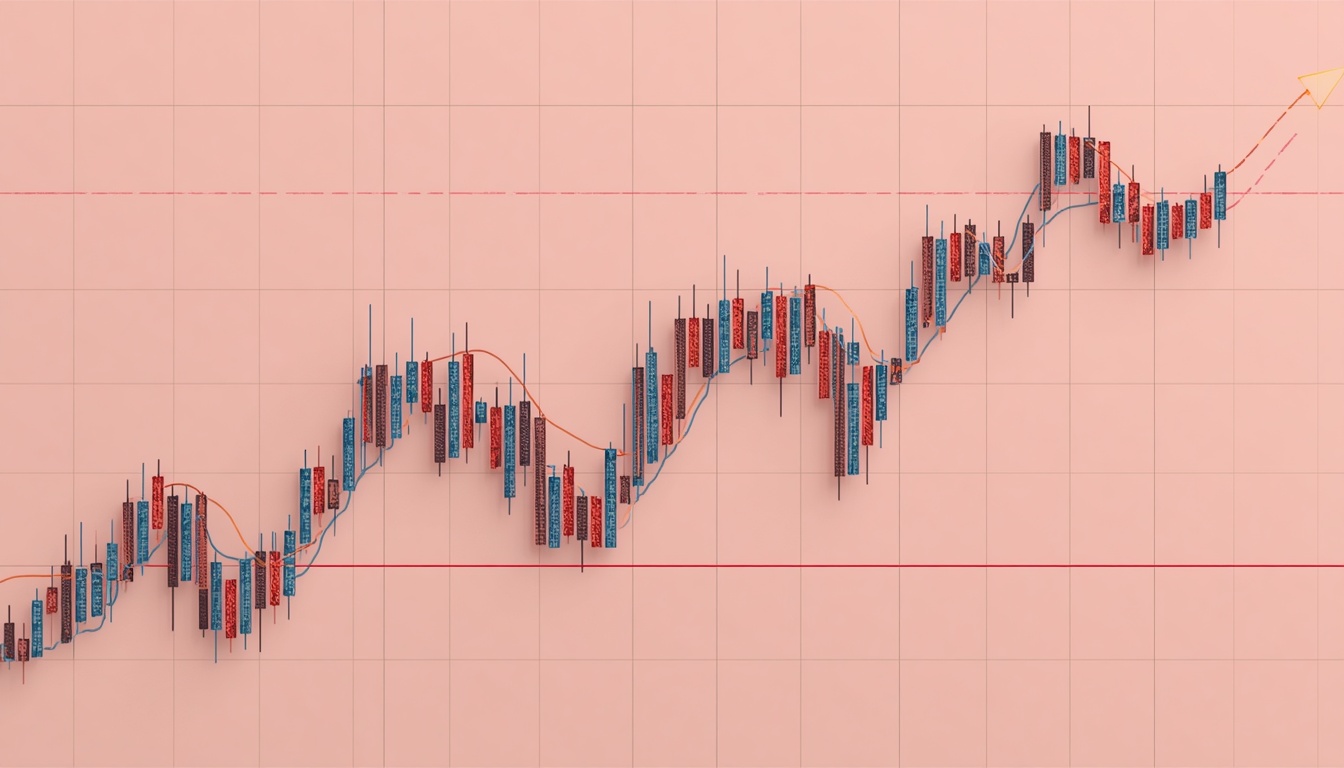
    A fast-updating crypto order book with a scalping bot executing rapid trades, illustrating a crypto scalping bot strategy

    How a crypto scalping bot works

    Strip away the marketing and every crypto scalping bot runs the same tight loop, just very fast:

    1. Ingest data. Stream live order-book and price data from the exchange.
    2. Generate a signal. Apply a rule — an order-book imbalance, a micro-breakout, a short moving-average cross — to decide whether a quick edge exists.
    3. Send the order. Fire the entry the instant the signal triggers.
    4. Exit fast. Take the small profit at a preset target, or cut the loss just as quickly.
    5. Apply risk checks. Cap position size and daily loss so one bad tick can’t wreck the account.

    A scalper bot may execute dozens or hundreds of trades per day this way. That frequency is the whole point — and also the whole problem, because every single trade pays a toll.

    The brutal math of fees

    Here is the part the “1% a day!” screenshots never show you. When you trade hundreds of times a day, fees stop being a footnote and become the main character.

    Consider this: a reasonably good scalping strategy wins about 60% of its trades. Sounds healthy. But research summarized by TradingView Hub found that paper returns of around 1% per day shrink to roughly 0.2% per day in live trading once you subtract exchange fees and spread — an 80% collapse between simulation and reality. The strategy didn’t change. The costs simply ate four-fifths of the edge.

    It gets starker. A CoinMetrics analysis found that only about 12% of micro-spread trading opportunities are actually profitable once fees and latency are accounted for. Eighty-eight percent of the “edges” a naive bot sees are mirages that vanish at the cash register. For a scalping bot, fee structure isn’t a detail — it’s the strategy.

    Why latency makes or breaks you

    The second killer is speed. Scalping profits live in a window measured in milliseconds, and if you’re slow, the window slams shut before you get through it.

    The numbers are unforgiving. When targeting 0.2–0.5% moves, profit margins on micro-spread trades vanish entirely above 200 milliseconds of latency. For reference, human reaction time is 200–250 milliseconds — meaning a human is, by definition, too slow to scalp at all. A competent crypto scalping bot executes in 5–50 milliseconds, and that gap is its entire reason to exist.

    This is why where and how your bot runs matters as much as its logic. A bot on a laggy home connection routing through a slow API is bringing a knife to a gunfight against systems co-located beside the exchange.

    A worked example

    Let’s make the math concrete. Suppose your bot targets a 0.30% move per trade on a futures pair.

    • Gross target: 0.30% per winning trade.
    • Fees: using futures maker orders at 0.02% per side, a round trip costs about 0.04%.
    • Net per win: roughly 0.26%.
    • Losses: on a losing trade you give back your stop, say 0.30%, plus the same 0.04% in fees.

    Now apply a 60% win rate over 100 trades: 60 wins at +0.26% and 40 losses at −0.34%. That nets out to roughly +2.0% across the 100 trades — genuinely good.

    But flip one variable. Use taker orders at 0.05% per side instead of maker, and the round-trip fee jumps to 0.10%. Suddenly each win nets only 0.20% and each loss costs 0.40%, and the same 100 trades barely break even. One fee setting flipped a winner into a coin toss. That sensitivity is the essence of scalping.

    What it takes to actually profit

    Put the pieces together and a profitable crypto scalping bot needs a specific, demanding combination:

    • A genuine edge — a signal with a win rate of at least 57–60%, validated out-of-sample, not curve-fit to last month.
    • Maker-order fees — using limit orders that add liquidity (around 0.02%) instead of taker orders that remove it.
    • Low latency — execution well under 200ms, ideally in the tens of milliseconds, via a fast connection or a cloud server near the exchange.
    • Strict risk control — tight per-trade stops and a hard daily loss limit, because high frequency means errors compound fast.
    • The right market phase — scalping suits liquid, volatile, ranging conditions and struggles in dead or violently trending markets.

    Miss any one of these and the math quietly turns against you. This is not a “set it and forget it” strategy.

    Where a crypto scalping bot wins and loses

    Matching the bot to conditions is half the battle.

    It wins when: the market is liquid and choppy, spreads are tight, volatility is steady, and your execution is fast. High-liquidity majors like BTC and ETH on a low-fee futures venue are the classic playground.

    It loses when: liquidity is thin (slippage explodes), the market is dead (no moves to capture, but fees still accrue), or a violent one-way trend runs your quick exits over. Thin altcoins are especially dangerous — the spread alone can exceed your profit target.

    The honest summary: scalping is the strategy most sensitive to costs and conditions. When everything aligns, it’s beautiful. When it doesn’t, it bleeds quietly.

    Common crypto scalping bot mistakes

    Most scalping failures come from the same handful of errors. Avoid these and you’ve dodged the majority of blown accounts.

    • Trading taker fees. Paying to remove liquidity instead of using maker limit orders can double your costs and flip a winner into a loser. On a high-frequency strategy, the fee tier is not optional.
    • Backtesting without costs. A backtest that ignores fees, spread, and slippage will always look brilliant and always lie. Model every cost before believing a single result.
    • Scalping illiquid altcoins. Thin order books mean wide spreads and ugly slippage. On a low-cap token, the spread alone can exceed your entire profit target.
    • Ignoring latency. Running a crypto scalping bot on a slow home connection guarantees you arrive after the edge is gone. Measure your real latency before going live.
    • No daily loss limit. At hundreds of trades a day, a malfunctioning strategy can bleed fast. A hard daily stop is the circuit breaker that saves the account.
    • Over-optimizing the win rate. Tuning parameters until the backtest hits 70% usually means you’ve fit noise. A robust 58% beats a fragile 70% every time.

    The pattern is clear: scalping punishes carelessness faster than any other strategy, because every mistake is multiplied by your trade count.

    Scalping vs other bot strategies

    It helps to see where scalping sits among automated approaches. A grid bot also trades frequently in small increments, but it’s passive about timing — it just harvests oscillation within a range. A scalping bot is active, hunting specific micro-signals and demanding speed. A momentum bot, by contrast, trades rarely and holds for days, caring nothing about milliseconds.

    That contrast reveals the trade-off. Scalping offers the most frequent feedback and, in theory, the steadiest stream of small wins — but it’s the most cost-sensitive and the most operationally demanding of the lot. If fees, latency, and constant tuning sound exhausting, a grid or momentum approach delivers far more return per unit of effort. Scalping rewards those who genuinely enjoy optimizing a fast machine; for everyone else, a slower strategy is usually the smarter use of capital.

    Getting started without getting burned

    If you want to try it, do it the survivable way:

    1. Start on a paper or testnet account. Prove the logic before risking a cent.
    2. Measure your real latency to the exchange, and pick a low-fee venue with a maker rebate.
    3. Model fees explicitly in every backtest — a strategy that’s profitable before fees and a loser after is the default outcome.
    4. Use a reputable platform if you’re not coding your own; tools like 3Commas, Pionex, and HaasOnline offer scalping presets.
    5. Start tiny and scale slowly, watching whether live results track your backtest. They usually won’t at first.

    Treat the first months as calibration, not income. The traders who survive scalping are the ones who respected the math before the market taught it to them.

    FAQ

    Is a crypto scalping bot profitable? It can be, but only with a real edge (57–60%+ win rate), maker-order fees, low latency, and strict risk control. Without those, fees and slippage usually erase the profit.

    Why do scalping backtests look so much better than live results? Because backtests often ignore real fees, spread, and slippage. Live returns commonly fall around 80% below paper returns once those costs are included.

    Do I need to code to run a crypto scalping bot? Not necessarily. Platforms like Pionex, 3Commas, and HaasOnline offer ready-made scalping bots, though coding your own gives more control over the edge.

    How fast does a scalping bot need to be? Fast. Profit margins on micro-moves disappear above 200ms of latency. Good bots execute in 5–50ms, far beyond human reaction time.

    What’s the biggest mistake scalping beginners make? Ignoring fees. At hundreds of trades a day, the difference between maker and taker fees alone can flip a winning strategy into a losing one.

    Key takeaways

    • A crypto scalping bot captures many tiny, fast profits rather than a few big ones — pure automation territory.
    • Fees are the main character. Paper returns near 1%/day routinely shrink to ~0.2%/day live, and only ~12% of micro-edges survive costs.
    • Latency decides everything. Above 200ms, the edge vanishes; good bots run in 5–50ms.
    • Profit demands a 57–60%+ win rate, maker fees, low latency, and tight risk control — all at once.
    • It’s not passive. Scalping is the most cost- and condition-sensitive strategy in the automated toolkit.

    Want to test a scalping setup safely? Our free Algo Trading Starter Kit includes a fee-and-latency calculator, a paper-trading checklist, and our low-fee exchange comparison. Grab it free → and find out if the math works before you risk real capital.
  • The Grid Trading Strategy That Works in Any Market

    The Grid Trading Strategy That Works in Any Market

    Imagine a strategy that doesn’t care whether the market goes up or down — one that quietly profits from the simple fact that prices wiggle. No predictions. No staring at charts trying to call the next move. Just a ladder of orders that buys low and sells high, over and over, while you do something else. That’s the promise of the grid trading strategy, and it’s why it has become one of the most popular automated approaches for crypto and forex traders in 2026.

    The promise is real — but so are the caveats. This walkthrough shows you exactly how the grid works, a worked example with real numbers, and the honest truth about the markets where it prints versus the ones where it bleeds.

    What this guide covers

    The core idea in one paragraph

    Grid trading places a series of buy and sell orders at fixed price intervals above and below a starting price. Together they form a grid. As the price oscillates, it triggers buys on the way down and sells on the way up. Each swing locks in a small profit. The magic is that you never have to predict direction — you only need the price to move. Volatility, usually the trader’s enemy, becomes the fuel.

    A price chart overlaid with evenly spaced buy and sell order lines, illustrating the grid trading strategy

    How the grid trading strategy works

    Picture a price hovering around $100. You define a range — say $90 to $110 — and slice it into evenly spaced levels every $2. At each level you place an order: buys below the current price, sells above it.

    When the price drops to $98, your buy order fills. When it climbs back to $100, the matching sell order fires, and you pocket the $2 spread. The price falls again, you buy again, it rises, you sell again. Each completed round trip banks a small, mechanical profit. The grid trading strategy turns a choppy, sideways market — the kind that frustrates trend traders — into a steady series of payouts.

    A bot handles all of this. Once you set the range, the spacing, and the order size, the software places and replaces orders around the clock. As B2Broker explains, this hands-off, rules-based execution is precisely what makes grids so popular for automation.

    A worked example with real numbers

    Numbers make it click. Let’s run a simple forex grid on EUR/USD.

    • Range: 1.1800 to 1.2000
    • Grid spacing: every 50 pips
    • Order size: a fixed lot at each level

    A geopolitical headline drags the pair down to 1.1850, filling your buy order there. Two days later, positive economic data pushes it back up to 1.1950, triggering the sell. That round trip nets roughly 100 pips of profit — without you predicting a single thing about the news.

    Now multiply that. In a market that chops between 1.1800 and 1.2000 for three weeks, the same grid might complete a dozen of these round trips. None individually impressive; together, a meaningful return. That compounding of small, repeatable wins is the entire appeal of the grid trading strategy.

    The three types of grids

    You can tune a grid to your market view:

    • Neutral grid — buys and sells balanced around the price, built for sideways, range-bound markets. The classic, lowest-opinion version.
    • Bullish grid — weighted toward accumulating on dips and selling into strength, for markets you expect to drift upward.
    • Bearish grid — weighted toward selling rallies and covering on dips, for markets you expect to grind lower.

    Beginners should start neutral. It makes the fewest assumptions and best demonstrates how the mechanics behave before you add a directional bias.

    Where the grid trading strategy shines

    Grids are at their best when three conditions line up:

    • Range-bound, choppy markets. Sideways price action that punishes trend followers is exactly what feeds a grid.
    • High-liquidity assets. Forex majors and large-cap crypto fill orders cleanly and keep spacing predictable.
    • Frequent volatility. The more the price oscillates within your range, the more round trips you bank.

    This is the kernel of truth behind “works in any market” — because it doesn’t need a trend, a grid keeps working in the flat, directionless conditions where most other strategies stall.

    Where it breaks down

    Now the honesty the marketing skips. A grid’s great weakness is a strong, sustained trend.

    Say the price breaks out of your range and keeps running one direction. The grid keeps filling orders on the losing side. It buys all the way down in a crash, or sells all the way up in a rally. Either way, you accumulate an ever-larger underwater position. The “works in any market” claim quietly fails exactly here.

    Two more costs bite. First, transaction costs: a grid fires many trades, and spreads plus commissions skim a little off every one. Second, margin pressure: holding multiple open positions demands capital, and an aggressive grid on a small account can hit a margin call fast. Respect these, or the strategy that felt like free money turns expensive.

    Tuning the grid: range, spacing, and size

    Three dials control a grid, and how you set them decides everything.

    The range is the price band you expect the asset to stay inside. Set it too narrow and a normal swing escapes it. Set it too wide and your capital spreads thin across levels that rarely trigger. The usual anchor points are recent support and resistance — the prices where the asset has reversed before.

    The spacing is the gap between orders. Tight spacing means more frequent, smaller round trips and more transaction costs. Wide spacing means fewer, larger wins but longer waits between fills. In a calm market you tighten the grid; in a volatile one you widen it so noise doesn’t churn your account with fees.

    The order size is how much you commit at each level. This is your risk dial. Smaller sizes let you cover more levels and survive a move against you. Larger sizes amplify both the profit and the danger. Beginners almost always start too large — resist it.

    There’s no single “best” setting. The right grid matches the asset’s typical volatility, and the only honest way to find it is to backtest and paper trade before risking real money.

    The grid trading strategy across crypto, forex, and stocks

    The same mechanics behave differently depending on where you deploy them.

    Crypto is the natural home of the grid trading strategy. Coins swing constantly, exchanges offer built-in grid bots, and large-cap pairs like BTC and ETH provide the liquidity grids need. The flip side is that crypto also produces violent trends — exactly the condition that hurts a grid most.

    Forex is the other classic fit. Major pairs are deeply liquid and often range for extended stretches, especially in quiet sessions. Leverage is widely available, which magnifies both the small wins and the breakout risk.

    Stocks and commodities can work too, but they trend more persistently and carry session gaps that can jump straight over your levels. Grids here demand wider ranges and more caution. Wherever you run it, the rule holds: the grid trading strategy wants chop, not conviction.

    Common grid trading mistakes to avoid

    Most grid blowups trace back to the same handful of errors:

    • No stop-loss. The single most common and most expensive mistake. Without a cap, a breakout turns a working grid into a growing loss.
    • A range built on hope. Setting the band to where you wish the price would stay, instead of where it actually trades.
    • Grids on trending assets. Running a neutral grid on something in a strong, established trend fights the strategy’s core weakness head-on.
    • Over-leverage. Stacking too many levels with too much size, leaving no margin buffer for an adverse move.
    • Ignoring fees. On a tight grid, transaction costs can quietly eat most of the profit. Always model them before going live.

    Grid trading vs buy-and-hold

    It’s worth asking why you’d run a grid at all instead of simply buying and holding. The answer comes down to what each approach is built for.

    Buy-and-hold bets on direction. You profit only if the asset rises over your holding period, and you ride out every dip along the way. It’s simple, cheap, and powerful in a long bull market — but it does nothing in a market that goes sideways for months.

    A grid bets on movement. It harvests the sideways chop that buy-and-hold sleeps through, turning a flat market into a stream of small wins. The trade-off is that it caps your upside: in a roaring bull run, a grid will sell its position too early and underperform a holder who simply sat tight.

    So they suit opposite conditions. Buy-and-hold wins the strong trends; the grid trading strategy wins the range. Many traders run both — holding a core position while a grid works a separate slice of capital on the swings. Neither is “better” in the abstract. The market you expect decides which one earns its keep.

    Setting up your first grid

    If you want to try it without learning to code, platforms like Pionex and 3Commas offer built-in grid bots. Start with these guardrails:

    1. Pick a range-bound, liquid asset — a forex major or a large-cap coin, not an illiquid token.
    2. Set a sensible range around recent support and resistance, not wishful extremes.
    3. Use conservative spacing and small order sizes so you can survive a breakout.
    4. Add a stop-loss outside the grid to cap the trend risk that kills grids.
    5. Paper trade first, then start small with money you can afford to lose.

    That stop-loss step is the one most beginners skip — and it’s the difference between a bad week and a blown account.

    FAQ

    Is the grid trading strategy profitable? It can be in range-bound, volatile markets, banking many small wins. In a strong trend it can lose steadily, so profitability depends heavily on matching it to the right conditions and using a stop.

    Does grid trading really work in any market? Mostly. It excels in sideways, choppy markets and keeps working where trend strategies stall — but a strong sustained breakout is its weak point. Treat “any market” as “any range-bound market.”

    What markets is grid trading best for? Highly liquid, frequently oscillating assets: forex majors and large-cap cryptocurrencies are the classic choices, though it’s also used on stocks and commodities.

    How much money do I need for a grid bot? Enough to hold several open positions comfortably. Undercapitalized grids face margin pressure quickly, so start small and conservative rather than maxing out levels.

    Do I need to code to run a grid? No. Grid bots are built into platforms like Pionex and 3Commas, making this one of the most beginner-accessible automated strategies.

    Key takeaways

    • The grid trading strategy profits from price swings, not predictions — volatility is the fuel.
    • It places laddered buy and sell orders across a range and banks the spread on each round trip.
    • It shines in range-bound, liquid, volatile markets and keeps working where trend strategies stall.
    • Its weakness is a strong sustained trend, plus transaction costs and margin pressure.
    • Always add a stop-loss outside the grid — it’s the safeguard beginners most often forget.

    Want to launch your first grid the safe way? Our free Algo Trading Starter Kit includes a grid-bot setup checklist, the range-and-spacing worksheet we use, and our vetted platform comparison. Download it free → and turn market noise into a plan instead of a gamble.