Tag: trading automation

  • 6 Passive Income Trading Strategies That Work in 2026

    6 Passive Income Trading Strategies That Work in 2026

    “Set it and forget it.” That phrase sells more trading bots than any backtest ever could. The fantasy is intoxicating: flip a switch, walk away, and watch money trickle in while you sleep. So let’s be honest from the first line — none of these passive income trading strategies are truly hands-off, and anyone who tells you otherwise is selling something. What they can be is low-effort once set up correctly, which is a different and far more achievable promise.

    This guide ranks six automated approaches by how genuinely passive each one is, explains how it makes money, and flags the work it still quietly demands. Think of “passive” as a spectrum, not a switch.

    What you’ll learn

    First, the honest truth about “passive”

    Here’s what the marketing skips: a bot automates execution, not judgment. It will place orders all night without you. It will not notice that the market regime changed, that your strategy stopped working, or that it’s time to switch off. That part is still your job.

    As multiple 2026 bot reviews stress, you can’t simply “set it and forget it.” A strategy that printed money last month may bleed this month, so the genuinely successful operators review their bots, adjust parameters, and turn them off at the right moments. The realistic goal of passive income trading strategies isn’t zero effort — it’s converting hours of active screen-watching into minutes of weekly oversight. That’s still a fantastic trade. Just go in with clear eyes.

    A dashboard ranking six passive income trading strategies by how hands-off each is

    How we ranked these passive income trading strategies

    We ranked the six on a single axis that matters most to you: how truly hands-off each is once running, balanced against how reliably it generates income. A strategy that needs daily babysitting scores low on “passive,” no matter how clever. Among passive income trading strategies, the most hands-off options sit at the top; the most demanding at the bottom.

    At a glance: the passive-ness ranking

    StrategyHow passiveProfits fromMain risk
    DCA botsVery highLong-term accumulationBuys through downtrends
    Index / rebalancingVery highDiversified market growthMarket-level returns only
    Grid botsMedium-highSideways oscillationStrong breakouts
    Trend-followingMediumSustained trendsChoppy whipsaws
    Copy tradingMediumA leader’s skillLeader’s drawdowns
    ArbitrageLowCross-market gapsThin margins, upkeep

    #1 DCA bots — the most hands-off

    Dollar-cost averaging bots buy a fixed amount of an asset on a fixed schedule, ignoring price entirely. Over time, this smooths out volatility — you buy more when prices are low and less when they’re high, automatically.

    It’s the closest thing to genuinely passive on this list because there’s almost nothing to tune. You’re not timing anything; you’re systematically accumulating. As the bot reviews note, DCA bots are especially effective for people who want a simple, automated buy-low-on-average approach without advanced knowledge.

    How passive: Very. Set the amount and schedule, then review monthly. The catch: It accumulates through downturns too, so it suits assets you believe in long-term — not anything you’d panic over.

    #2 Grid trading bots

    A grid bot places a ladder of buy orders below the current price and sell orders above it. Each time price oscillates through the range, it banks a small profit. It’s a favorite for sideways, choppy markets.

    Once configured, a grid bot runs itself for days — solidly in passive territory. But it carries a real risk: a strong breakout out of your range leaves it accumulating losses on one side. Our full grid trading strategy guide covers the mechanics and the all-important stop-loss.

    How passive: Fairly. Runs unattended, but needs a sensible range and a stop. The catch: A strong trend breaks the grid. It wants chop, not conviction.

    #3 Trend-following bots

    A trend-following or momentum bot rides established trends — buying strength, exiting weakness — using simple rules like a moving-average crossover. It aims to capture the bulk of a big move and sidestep the worst crashes.

    It’s reasonably passive: the rules are mechanical, and the bot trades infrequently compared to a scalper. The trade-off is whipsaws — in choppy markets it gets chopped up with small losses, the mirror image of where a grid thrives.

    How passive: Moderately. Infrequent trades, but benefits from occasional review. The catch: Sideways markets cause repeated small losses.

    #4 Copy trading

    Copy trading lets you automatically mirror the trades of an experienced trader. Platforms like Zignaly built entire profit-sharing ecosystems around it. You’re outsourcing the strategy itself to someone with a track record.

    It can be very hands-off — once you’ve chosen who to follow, the trades happen automatically. But the passivity is deceptive. Your returns are only as good as the trader you copied, and even strong traders have losing streaks. Choosing and monitoring who you follow is the work that replaces strategy-building.

    How passive: Hands-off to run, but choosing and vetting traders is ongoing. The catch: You inherit someone else’s drawdowns and decisions.

    #5 Index and rebalancing bots

    These bots hold a basket of assets at target weights and automatically rebalance — trimming winners and topping up laggards — to maintain the allocation. It’s a disciplined, low-touch way to stay diversified.

    The income here is long-term and steady rather than active trading profit, which makes it genuinely low-maintenance. It won’t shoot the lights out, but it won’t demand much either.

    How passive: Very. Rebalancing runs on a schedule. The catch: Returns track the market, so don’t expect outsized gains.

    #6 Arbitrage bots — least passive

    Arbitrage bots exploit price differences for the same asset across exchanges. In theory it’s market-neutral income; in practice it’s the least passive option here.

    Edges are thin and fleeting, fees and transfer times eat them, and staying competitive demands constant monitoring and infrastructure. It’s powerful for technically capable operators but a poor fit for anyone seeking a quiet, hands-off income.

    How passive: Barely. Demands monitoring, speed, and upkeep. The catch: Thin margins and high technical overhead.

    Crypto vs stocks: where these strategies fit

    The market you choose shapes which passive income trading strategies make sense.

    Crypto runs 24/7 and swings hard, which suits grid and DCA bots especially well. There’s always movement to harvest, and no market close to interrupt the bot. The no-code ecosystem — Pionex, 3Commas, Bitsgap — is also most mature here. The cost is sharper volatility and lighter regulation, so conservative position sizing matters more.

    Stocks and ETFs move slower and rest overnight and on weekends. That favors trend-following and index/rebalancing bots over high-frequency oscillation. The upside is stronger regulation and decades of clean data for testing. The 2026 removal of the $25,000 day-trading minimum also made automated equity strategies viable on smaller accounts.

    Most beginners start in crypto for its accessibility and round-the-clock action, then add equity strategies as they grow. Neither is strictly better. Match the market to the strategy — and to how much volatility you can comfortably sleep through.

    The maintenance nobody mentions

    Whichever you choose, budget for the recurring work that keeps “passive” income alive:

    • Regime checks. Confirm the strategy still fits current market conditions — grids want chop, trend bots want trends.
    • Performance review. Compare live results to expectations and kill what’s clearly broken.
    • Risk hygiene. Verify stops, position sizes, and that no single position has ballooned.
    • The off switch. The most underrated skill is turning a bot off when its market disappears.

    Do this for fifteen minutes a week and you’ve earned the “passive” label honestly. Skip it, and the market eventually collects what you ignored.

    What can these strategies realistically earn?

    This is where expectations need an anchor. Ignore the screenshots of triple-digit months — they’re survivorship bias at best, fabrication at worst.

    Realistic returns from passive income trading strategies land in the same range as other disciplined automated approaches: roughly single digits to the low double digits annually for most retail operators, in good conditions. A well-run grid bot in a choppy market or a steady DCA accumulation can compound respectably over time. But none of these are money printers, and all of them have losing stretches. As honest bot reviews repeatedly note, no platform can promise guaranteed returns, and any that does is a red flag.

    The mindset that works: treat this as a way to make your capital work a little harder with a little oversight, not as a salary replacement you can switch on overnight. The people who succeed with passive income trading strategies are the ones who size expectations correctly. They compound modest, real returns instead of chasing fantasy ones — and they never risk money they can’t afford to lose on the promise of “passive.” Anchor your expectations there, and these strategies become a genuine asset that quietly works in the background, rather than a disappointment waiting to happen — and a far better use of idle capital than letting it sit untouched.

    How to start with passive income trading strategies

    1. Match the strategy to your assets and temperament — DCA for long-term conviction, grid for sideways markets, copy trading if you’d rather outsource.
    2. Use a reputable platform (3Commas, Pionex, Bitsgap) or code your own.
    3. Paper trade first, then start with capital you can afford to lose.
    4. Schedule a weekly check-in from day one — it’s the habit that separates real income from slow bleed.

    FAQ

    Are passive income trading strategies actually passive? Not entirely. Bots automate execution, not judgment. The realistic goal is low-effort — minutes of weekly oversight instead of hours of active trading — not zero effort.

    Which strategy is the most hands-off? DCA bots, followed by index/rebalancing bots. Both run on a schedule with little to tune, making them the closest to genuinely passive.

    Can I lose money with these bots? Yes. Grid and DCA bots can lose in strongly adverse markets, copy trading inherits the leader’s losses, and no honest platform promises guaranteed returns.

    Do I need coding skills? No. Most of these run on no-code platforms like Pionex, 3Commas, and Bitsgap. Coding only helps if you want to customize a strategy.

    How much time do they really take? Plan for roughly fifteen minutes a week of review — regime checks, performance, and risk hygiene. That light upkeep is what keeps the income flowing.

    Which markets suit passive income bots best? Crypto suits grid and DCA bots thanks to 24/7 volatility and mature no-code platforms. Stocks suit trend-following and rebalancing bots, with stronger regulation and deeper data for testing. Many traders eventually run both.

    Key takeaways

    • No passive income trading strategies are truly hands-off — bots automate execution, not judgment.
    • DCA and index/rebalancing bots are the most passive; arbitrage is the least.
    • Grid and trend bots sit in the middle — low-touch, but each has a market it hates (trends and chop, respectively).
    • Copy trading outsources the strategy but not the responsibility of choosing well.
    • Budget ~15 minutes weekly for regime checks and risk hygiene — that’s the price of keeping “passive” income alive.

    Want a low-effort income setup that won’t blow up? Our free Algo Trading Starter Kit includes a strategy-matcher quiz, a weekly-review checklist, and our vetted platform comparison. Download it free → and build income you can actually walk away from — for a week, at least.
  • The Grid Trading Strategy That Works in Any Market

    The Grid Trading Strategy That Works in Any Market

    Imagine a strategy that doesn’t care whether the market goes up or down — one that quietly profits from the simple fact that prices wiggle. No predictions. No staring at charts trying to call the next move. Just a ladder of orders that buys low and sells high, over and over, while you do something else. That’s the promise of the grid trading strategy, and it’s why it has become one of the most popular automated approaches for crypto and forex traders in 2026.

    The promise is real — but so are the caveats. This walkthrough shows you exactly how the grid works, a worked example with real numbers, and the honest truth about the markets where it prints versus the ones where it bleeds.

    What this guide covers

    The core idea in one paragraph

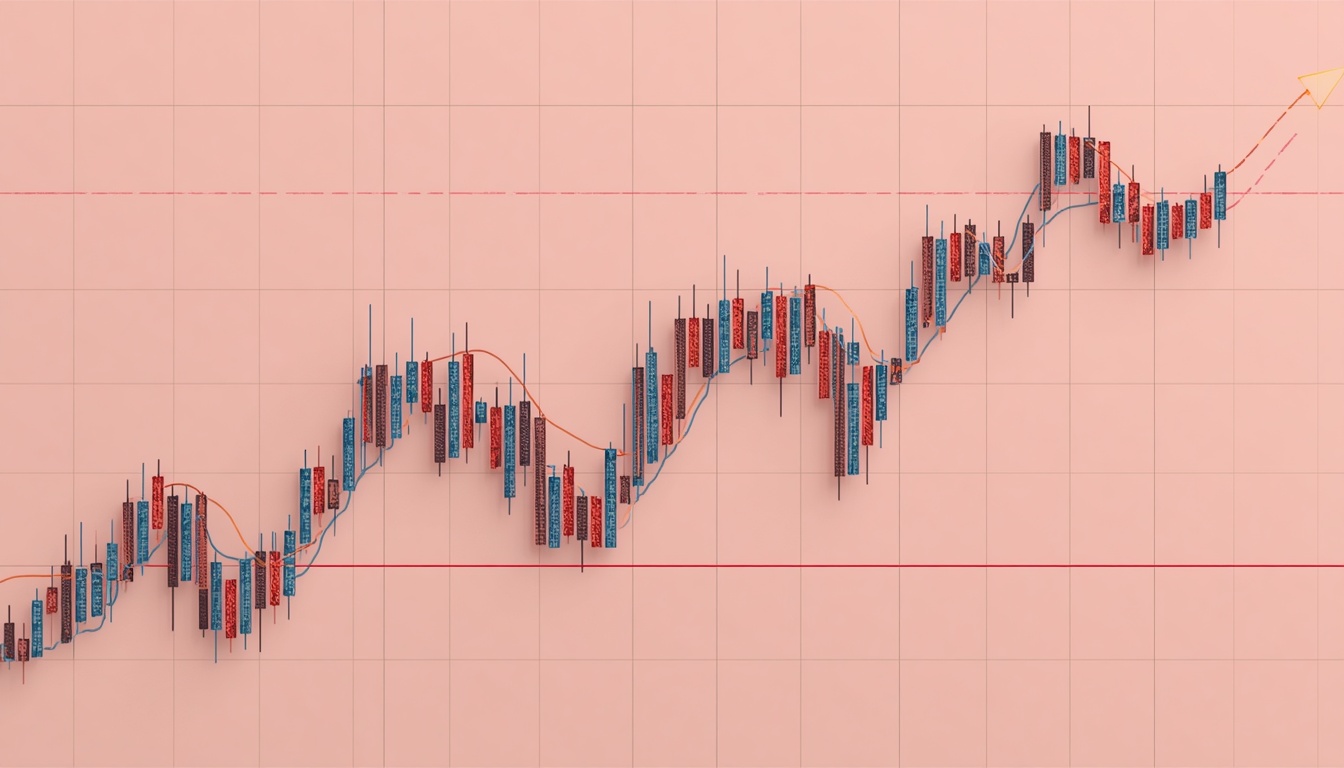
    Grid trading places a series of buy and sell orders at fixed price intervals above and below a starting price. Together they form a grid. As the price oscillates, it triggers buys on the way down and sells on the way up. Each swing locks in a small profit. The magic is that you never have to predict direction — you only need the price to move. Volatility, usually the trader’s enemy, becomes the fuel.

    A price chart overlaid with evenly spaced buy and sell order lines, illustrating the grid trading strategy

    How the grid trading strategy works

    Picture a price hovering around $100. You define a range — say $90 to $110 — and slice it into evenly spaced levels every $2. At each level you place an order: buys below the current price, sells above it.

    When the price drops to $98, your buy order fills. When it climbs back to $100, the matching sell order fires, and you pocket the $2 spread. The price falls again, you buy again, it rises, you sell again. Each completed round trip banks a small, mechanical profit. The grid trading strategy turns a choppy, sideways market — the kind that frustrates trend traders — into a steady series of payouts.

    A bot handles all of this. Once you set the range, the spacing, and the order size, the software places and replaces orders around the clock. As B2Broker explains, this hands-off, rules-based execution is precisely what makes grids so popular for automation.

    A worked example with real numbers

    Numbers make it click. Let’s run a simple forex grid on EUR/USD.

    • Range: 1.1800 to 1.2000
    • Grid spacing: every 50 pips
    • Order size: a fixed lot at each level

    A geopolitical headline drags the pair down to 1.1850, filling your buy order there. Two days later, positive economic data pushes it back up to 1.1950, triggering the sell. That round trip nets roughly 100 pips of profit — without you predicting a single thing about the news.

    Now multiply that. In a market that chops between 1.1800 and 1.2000 for three weeks, the same grid might complete a dozen of these round trips. None individually impressive; together, a meaningful return. That compounding of small, repeatable wins is the entire appeal of the grid trading strategy.

    The three types of grids

    You can tune a grid to your market view:

    • Neutral grid — buys and sells balanced around the price, built for sideways, range-bound markets. The classic, lowest-opinion version.
    • Bullish grid — weighted toward accumulating on dips and selling into strength, for markets you expect to drift upward.
    • Bearish grid — weighted toward selling rallies and covering on dips, for markets you expect to grind lower.

    Beginners should start neutral. It makes the fewest assumptions and best demonstrates how the mechanics behave before you add a directional bias.

    Where the grid trading strategy shines

    Grids are at their best when three conditions line up:

    • Range-bound, choppy markets. Sideways price action that punishes trend followers is exactly what feeds a grid.
    • High-liquidity assets. Forex majors and large-cap crypto fill orders cleanly and keep spacing predictable.
    • Frequent volatility. The more the price oscillates within your range, the more round trips you bank.

    This is the kernel of truth behind “works in any market” — because it doesn’t need a trend, a grid keeps working in the flat, directionless conditions where most other strategies stall.

    Where it breaks down

    Now the honesty the marketing skips. A grid’s great weakness is a strong, sustained trend.

    Say the price breaks out of your range and keeps running one direction. The grid keeps filling orders on the losing side. It buys all the way down in a crash, or sells all the way up in a rally. Either way, you accumulate an ever-larger underwater position. The “works in any market” claim quietly fails exactly here.

    Two more costs bite. First, transaction costs: a grid fires many trades, and spreads plus commissions skim a little off every one. Second, margin pressure: holding multiple open positions demands capital, and an aggressive grid on a small account can hit a margin call fast. Respect these, or the strategy that felt like free money turns expensive.

    Tuning the grid: range, spacing, and size

    Three dials control a grid, and how you set them decides everything.

    The range is the price band you expect the asset to stay inside. Set it too narrow and a normal swing escapes it. Set it too wide and your capital spreads thin across levels that rarely trigger. The usual anchor points are recent support and resistance — the prices where the asset has reversed before.

    The spacing is the gap between orders. Tight spacing means more frequent, smaller round trips and more transaction costs. Wide spacing means fewer, larger wins but longer waits between fills. In a calm market you tighten the grid; in a volatile one you widen it so noise doesn’t churn your account with fees.

    The order size is how much you commit at each level. This is your risk dial. Smaller sizes let you cover more levels and survive a move against you. Larger sizes amplify both the profit and the danger. Beginners almost always start too large — resist it.

    There’s no single “best” setting. The right grid matches the asset’s typical volatility, and the only honest way to find it is to backtest and paper trade before risking real money.

    The grid trading strategy across crypto, forex, and stocks

    The same mechanics behave differently depending on where you deploy them.

    Crypto is the natural home of the grid trading strategy. Coins swing constantly, exchanges offer built-in grid bots, and large-cap pairs like BTC and ETH provide the liquidity grids need. The flip side is that crypto also produces violent trends — exactly the condition that hurts a grid most.

    Forex is the other classic fit. Major pairs are deeply liquid and often range for extended stretches, especially in quiet sessions. Leverage is widely available, which magnifies both the small wins and the breakout risk.

    Stocks and commodities can work too, but they trend more persistently and carry session gaps that can jump straight over your levels. Grids here demand wider ranges and more caution. Wherever you run it, the rule holds: the grid trading strategy wants chop, not conviction.

    Common grid trading mistakes to avoid

    Most grid blowups trace back to the same handful of errors:

    • No stop-loss. The single most common and most expensive mistake. Without a cap, a breakout turns a working grid into a growing loss.
    • A range built on hope. Setting the band to where you wish the price would stay, instead of where it actually trades.
    • Grids on trending assets. Running a neutral grid on something in a strong, established trend fights the strategy’s core weakness head-on.
    • Over-leverage. Stacking too many levels with too much size, leaving no margin buffer for an adverse move.
    • Ignoring fees. On a tight grid, transaction costs can quietly eat most of the profit. Always model them before going live.

    Grid trading vs buy-and-hold

    It’s worth asking why you’d run a grid at all instead of simply buying and holding. The answer comes down to what each approach is built for.

    Buy-and-hold bets on direction. You profit only if the asset rises over your holding period, and you ride out every dip along the way. It’s simple, cheap, and powerful in a long bull market — but it does nothing in a market that goes sideways for months.

    A grid bets on movement. It harvests the sideways chop that buy-and-hold sleeps through, turning a flat market into a stream of small wins. The trade-off is that it caps your upside: in a roaring bull run, a grid will sell its position too early and underperform a holder who simply sat tight.

    So they suit opposite conditions. Buy-and-hold wins the strong trends; the grid trading strategy wins the range. Many traders run both — holding a core position while a grid works a separate slice of capital on the swings. Neither is “better” in the abstract. The market you expect decides which one earns its keep.

    Setting up your first grid

    If you want to try it without learning to code, platforms like Pionex and 3Commas offer built-in grid bots. Start with these guardrails:

    1. Pick a range-bound, liquid asset — a forex major or a large-cap coin, not an illiquid token.
    2. Set a sensible range around recent support and resistance, not wishful extremes.
    3. Use conservative spacing and small order sizes so you can survive a breakout.
    4. Add a stop-loss outside the grid to cap the trend risk that kills grids.
    5. Paper trade first, then start small with money you can afford to lose.

    That stop-loss step is the one most beginners skip — and it’s the difference between a bad week and a blown account.

    FAQ

    Is the grid trading strategy profitable? It can be in range-bound, volatile markets, banking many small wins. In a strong trend it can lose steadily, so profitability depends heavily on matching it to the right conditions and using a stop.

    Does grid trading really work in any market? Mostly. It excels in sideways, choppy markets and keeps working where trend strategies stall — but a strong sustained breakout is its weak point. Treat “any market” as “any range-bound market.”

    What markets is grid trading best for? Highly liquid, frequently oscillating assets: forex majors and large-cap cryptocurrencies are the classic choices, though it’s also used on stocks and commodities.

    How much money do I need for a grid bot? Enough to hold several open positions comfortably. Undercapitalized grids face margin pressure quickly, so start small and conservative rather than maxing out levels.

    Do I need to code to run a grid? No. Grid bots are built into platforms like Pionex and 3Commas, making this one of the most beginner-accessible automated strategies.

    Key takeaways

    • The grid trading strategy profits from price swings, not predictions — volatility is the fuel.
    • It places laddered buy and sell orders across a range and banks the spread on each round trip.
    • It shines in range-bound, liquid, volatile markets and keeps working where trend strategies stall.
    • Its weakness is a strong sustained trend, plus transaction costs and margin pressure.
    • Always add a stop-loss outside the grid — it’s the safeguard beginners most often forget.

    Want to launch your first grid the safe way? Our free Algo Trading Starter Kit includes a grid-bot setup checklist, the range-and-spacing worksheet we use, and our vetted platform comparison. Download it free → and turn market noise into a plan instead of a gamble.

  • Make Money With Trading Bots? The Honest 2026 Reality

    Make Money With Trading Bots? The Honest 2026 Reality

    Type “trading bot” into any search engine and you’ll drown in screenshots of green P&L charts and claims of effortless passive income. So here’s the question worth answering honestly: can you actually make money with trading bots, or is the whole category a polished trap?

    The real answer is uncomfortable for both the hype crowd and the cynics. Bots can make money — but almost never in the way the ads promise, and almost never for the people who buy them expecting magic. Let’s look at what the evidence actually shows in 2026.

    Table of Contents

    The short answer

    Yes, you can make money with trading bots — but they are not profitable by default. A bot is a tool that executes a strategy. If the strategy has an edge and the risk controls are sound, the bot can turn that edge into consistent execution. If the strategy is weak, the bot simply loses money faster and more reliably than you would by hand.

    In other words, the profit comes from the strategy and the discipline behind it, not from the code itself.

    A trader monitoring a crypto trading bot's performance dashboard on a laptop, evaluating whether you can make money with trading bots

    What returns are actually realistic?

    Ignore the influencers showing 300% months. Here’s a grounded view.

    Reviews of leading commercial bots in 2026 cover names like WunderTrading, 3Commas, Cryptohopper, and Bitsgap. Top performers deliver annualized returns in the 12–25% range, according to a WunderTrading roundup. That’s genuinely good when it holds. It is also a world away from the “double your account every month” fantasy.

    Two caveats matter. First, those are top performer numbers, not average user results. Second, returns swing hard with market conditions; a grid bot that thrives in choppy markets can bleed in a strong trend.

    Why most people fail to make money with trading bots

    The failure rate is high, and the reasons are consistent.

    • They treat bots as set-and-forget. Bots are not autopilot. Traders who monitor conditions and reconfigure when the market shifts consistently outperform those who deploy and walk away.
    • They never validate the strategy. Over 80% of retail traders lose money, frequently because they trust a strategy they never properly tested.
    • They underestimate costs. Fees and slippage quietly turn a paper winner into a real loser.
    • They buy a black box. A bot you don’t understand is one you can’t fix or even diagnose when it stops working.

    Who does make money with trading bots

    So who does make money with trading bots? A clear pattern emerges from the data. Bots reward the already-disciplined and punish the shortcut-seekers.

    Around 42% of traders use bots for speed, accuracy, and removing emotion from execution, as noted in Phemex’s analysis. The people who profit tend to share three traits. They have a tested edge. They actively manage their bots. And they size positions conservatively. The bot amplifies an existing skill — it doesn’t manufacture one.

    The crypto bot market itself is booming, valued around $54 billion in 2026, which tells you the tools are selling well. It says nothing about whether the average buyer is profitable.

    Bots automate execution, not intelligence

    This is the single most important idea on the page. A trading bot automates what you do, not whether you should do it.

    Even the most advanced AI-driven bots in 2026 still need human oversight and direction. They execute a vision; they don’t supply one. The traders who succeed use bots the way a pilot uses autopilot. It handles routine execution, while the human stays responsible for the destination.

    When a bot is marketed as a “magical profit machine that runs unsupervised,” that’s the clearest signal to walk away.

    How to give yourself a real chance

    If you want a genuine shot at making money with trading bots, do this:

    1. Learn a strategy first. Understand the edge before you automate it.
    2. Backtest honestly. Include fees and slippage; guard against overfitting.
    3. Paper trade for weeks. Confirm the bot behaves in live conditions.
    4. Start small. Risk only what you can afford to lose entirely.
    5. Monitor and adapt. Turn the bot off when the market no longer fits its logic.

    This is slower and less glamorous than the ads suggest. It’s also the only approach the evidence actually supports.

    FAQ

    Can beginners make money with trading bots? Rarely at first. Beginners usually lose money while they learn. Bots reward existing discipline, so build the skill before expecting profit.

    Are free trading bots profitable? The price tag isn’t the issue — the strategy is. A free bot running a sound, well-tested strategy can outperform an expensive one running a weak idea.

    What’s a realistic return from a trading bot? Top performers report roughly 12–25% annualized, but average users often do worse. Treat any promise of monthly doubling as a red flag.

    Do trading bots work in all markets? No. Most bots suit specific conditions. A grid bot likes choppy ranges; a trend bot likes strong directional moves. Matching the bot to the market is part of the skill.

    Is it passive income? Not really. Profitable bot trading requires ongoing monitoring and adjustment. “Passive” is the marketing word, not the reality.

    Key takeaways

    • You can make money with trading bots, but not by default. Profit comes from the strategy, not the software.
    • Realistic top returns are roughly 12–25% annualized — not monthly miracles.
    • Most failures come from set-and-forget habits and untested strategies.
    • Bots automate execution, not judgment. Human oversight remains essential.
    • The winners are disciplined first, automated second.

    Want to do this the right way? Grab our free Algo Trading Starter Kit: an honest beginner roadmap, a Python bot template, and our vetted broker and platform comparison. Get instant access → and join 12,000+ traders learning to automate without the hype.

  • The Quiet Revolution: How AI Is Reshaping Quantitative Trading

    The Quiet Revolution: How AI Is Reshaping Quantitative Trading

    In the spring of 2024, a Bank of England survey returned a number that would have been unthinkable a decade earlier: 75% of financial firms now deploy some form of AI in their operations, and among large banks, insurers, and asset managers, the figure hits 100%. The quantitative trading world, long defined by mathematicians in quiet rooms building factor models and running regressions, has crossed a threshold. What began as rule-based automation — if the 50-day moving average crosses the 200-day, buy — has become something far more fluid: systems that learn, adapt, and form convictions from data no human analyst could ever process.

    This is not a story about machines replacing human traders. It is a story about what happens when the tools of modern artificial intelligence — deep neural networks, reinforcement learning, large language models — meet a domain that has always been, at its core, a signal extraction problem. Financial markets generate an ocean of data every second. Prices, volumes, order-book microstructure, news headlines, earnings call transcripts, satellite images of parking lots, shipping-container counts at ports. The question has always been: what matters? AI is fundamentally changing which signals get found, how portfolios get built, and what it means to have an edge.

    From Linear Regression to Neural Architecture

    Classical quantitative finance was built on a foundation of linear models and econometric assumptions. Factor investing — the idea that stocks can be explained by exposure to a handful of systematic drivers like momentum, value, size, and quality — powered decades of hedge fund returns. The models were interpretable, their assumptions well-understood, and their limitations well-known: they could not capture nonlinear relationships, regime changes, or the kind of complex interaction effects that real markets exhibit.

    Machine learning changed the terms of engagement. Where a linear regression sees a straight line, a gradient-boosted tree sees branching decision boundaries. A neural network sees layered representations. The shift is not merely about accuracy — it is about modeling the world as it actually behaves: nonlinear, path-dependent, and governed by feedback loops that econometrics was never designed to handle.

    Consider the limit order book, the real-time record of every bid and ask sitting at every price level in an exchange. A single liquid stock might generate millions of order-book events in a day — cancellations, amendments, executions — each encoding micro-information about the intentions of market participants. A human trader cannot read this firehose. A deep learning model can. Recent research has applied transformer architectures and state-space models to order-book data, treating the stream of messages as a sequence-modeling problem not unlike natural language. The model learns the grammar of market microstructure: which patterns of order flow precede price moves, which configurations signal the presence of an informed trader, which cancellations are genuine and which are spoofing.

    The results are striking. Research published in 2025 demonstrated that LSTM-based neural networks applied to cryptocurrency portfolios achieved a Sharpe ratio of 2.975 with a profit percentage of 94.86% in backtesting — numbers that would make any portfolio manager sit up. A Sharpe ratio above 1.0 is generally considered good; above 2.0 is excellent; approaching 3.0 is the territory where systematic strategies begin to look almost too good to be true. Whether such performance survives the transition from backtest to live trading is an open question — and a deeply contested one — but the direction of travel is unmistakable.

    Reinforcement Learning and the Quest for Adaptive Strategy

    If supervised learning is about recognizing patterns in historical data, reinforcement learning is about learning to act in an environment where every action changes the state of the world. That makes it a natural fit for trading, where placing an order moves the market, taking profit alters the portfolio, and the optimal action at any moment depends on what you have already done and what the market has already absorbed.

    Reinforcement learning agents learn by trial and error in simulated environments, receiving rewards for profitable actions and penalties for losses. Over millions of simulated trading days, they develop policies — mappings from market states to actions — that no human designed and no static rule book could encode. The most advanced implementations use actor-critic architectures, where one network (the actor) proposes trades and another (the critic) evaluates them, both improving together through experience.

    The approach has found particularly fertile ground in derivatives hedging. The classic Black-Scholes framework gives a clean, closed-form answer for how to hedge an option: delta-hedge continuously, rebalancing as the underlying moves. But reality intrudes. Transaction costs eat into returns. Markets gap. Volatility is not constant. Deep distributional reinforcement learning models, such as D4PG with quantile regression, have been deployed by quantitative hedge funds to learn hedging policies that directly optimize risk-adjusted returns under real-world frictions, measuring Value-at-Risk and Conditional Value-at-Risk across different volatility regimes. These models do not merely approximate the theoretical hedge — they discover strategies that a human options trader might recognize as experience-hardened intuition, but backed by statistical rigor the trader could never articulate.

    Portfolio management, too, is being reimagined through reinforcement learning. Traditional mean-variance optimization asks: given expected returns and a covariance matrix, what is the optimal allocation? A reinforcement learning agent asks a more fundamental question: given a stream of market data and a goal, what sequence of trades maximizes terminal wealth while respecting risk constraints? Multi-agent frameworks take this further, assigning separate learning agents to different asset classes or sectors and letting them coordinate — or compete — toward a shared portfolio objective. The result is a system that can shift allocations not according to a fixed rebalancing schedule but in response to the texture of the market itself.

    The Language of Markets: LLMs and Sentiment at Scale

    For most of quantitative finance’s history, the information that moved markets was divided into two categories. Hard data — prices, volumes, economic statistics — could be modeled mathematically. Soft data — Fed chair speeches, earnings call nuance, geopolitical tension, the tone of a CEO’s shareholder letter — belonged to the domain of human judgment. Quantitative traders got prices and fundamentals; discretionary traders got narrative and sentiment. The wall between them was high.

    Large language models have started to dismantle it. The same architectures that power ChatGPT and Claude — transformer models trained on vast corpora of text — can be fine-tuned on financial language and deployed to read the textual universe that human analysts struggle to keep up with. Every earnings call transcript, every SEC filing, every Federal Reserve statement, every news article from every wire service, every post on financial social media — the volume is staggering, and it is all rich with signal for a model that can parse it.

    FinBERT, a BERT model fine-tuned specifically on financial text, was an early milestone. More recently, models like FinGPT have added dissemination-awareness and context-enrichment, understanding not just what a news item says but how it is spreading through information networks and what it means in the context of the company’s recent history. A 2025 benchmark study comparing LLMs against classical sentiment analysis approaches found that the large language models outperformed in the vast majority of cases — not marginally, but decisively.

    The frontier is moving beyond simple sentiment classification — positive, negative, neutral — toward something more subtle. Modern systems extract structured signals from unstructured text: the probability that a central bank will hike rates, inferred from the linguistic patterns in speeches; the degree of uncertainty in a management team’s forward guidance, measured by the ratio of hedging language to declarative statements; the implied correlation between two companies based on the co-occurrence patterns in analyst reports. These are signals that existed before but could not be systematically harvested. LLMs are turning soft data into hard data at industrial scale.

    The architecture for deploying these models is evolving rapidly. Quantized versions of large language models — QF-LLM and similar approaches — reduce the memory footprint and inference cost to the point where real-time sentiment monitoring becomes practical even for smaller funds. Retrieval-Augmented Generation, or RAG, lets systems ground their analysis in up-to-date financial databases rather than relying on training data that may be months old. Multi-LLM ensemble approaches, like FinSentLLM, combine the judgments of several models to produce sentiment forecasts more robust than any single model could deliver.

    The Alternative Data Revolution

    The public-market data that everyone can see — price, volume, fundamentals — has been arbitraged to near-death. The edges that remain lie in data that is public in principle but difficult to process at scale, or data that was never traditionally considered financial information at all.

    Satellite imagery of retail parking lots, analyzed by computer vision models, can estimate foot traffic at major chains before quarterly earnings are released. Natural language processing of shipping manifests and port congestion data can anticipate supply-chain disruptions that will show up in earnings three months later. Geolocation data from mobile phones can track consumer behavior patterns with a granularity that official statistics cannot match. Credit card transaction panels, web scraping of product prices, social media sentiment aggregated across millions of posts — each of these is a dataset that, properly cleaned and modeled, can generate alpha.

    The technical challenge is immense. Alternative datasets are messy, biased, irregularly sampled, and often enormous. A single satellite imagery provider might generate terabytes of new images daily. The skill is not in having the data — it is in engineering the pipeline that ingests it, cleans it, extracts features from it, and connects those features to financial outcomes without overfitting. This is where modern AI toolchains shine: convolutional neural networks for image data, transformer architectures for text, graph neural networks for supply-chain relationships, all orchestrated through cloud infrastructure that can scale to the data’s size.

    The modern quantitative trading system might incorporate over 200 factors spanning momentum, value, quality, market microstructure, sentiment, and alternative data — each one a hypothesis about what predicts returns, each one requiring rigorous statistical validation, and each one competing for a place in a portfolio that must balance signal decay against transaction costs. Feature engineering — the art and science of transforming raw data into predictive inputs — remains critical even in the age of deep learning. The best systems combine both: automatically learned representations from neural networks alongside hand-crafted features that encode domain knowledge about how markets work.

    High-Frequency Trading and the Speed Frontier

    No discussion of AI in quantitative trading is complete without confronting high-frequency trading, or HFT — the domain where speed itself is the strategy. As of 2026, HFT accounts for approximately 72% to 78% of all US equity trading volume. The trades are held for microseconds to milliseconds. The edge is not in predicting where a stock will be in a week; it is in being the first to react to an order-flow imbalance, an exchange-route latency differential, or a cross-asset correlation breakdown.

    AI’s role in HFT is constrained by a hard physical limit: inference time. A deep neural network that takes 10 milliseconds to produce a prediction is useless in a world where the competition is making decisions in 800 nanoseconds. The AI models used in HFT are necessarily small, specialized, and often implemented directly in hardware — FPGAs running lightweight gradient-boosted trees or compact fully-connected networks, optimized to the level of individual logic gates. The heavy lifting of model development happens offline, in simulation, where deep learning can explore the space of possible strategies; what gets deployed to the live trading path is a distilled, hardened version stripped of everything that costs a microsecond.

    This hardware-software co-design is one of the least visible but most expensive frontiers in quantitative finance. A top-tier HFT firm might spend tens of millions of dollars on microwave towers, custom FPGA boards, and the engineering talent to program them — all for an advantage measured in nanoseconds. AI is not separate from this arms race; it is the brains, and the hardware is the body.

    The Problem That Won’t Go Away: Overfitting and Decay

    Every quantitative researcher learns the same lesson eventually, usually the hard way: a backtest is a story you tell yourself about what might have happened, not a guarantee of what will happen. AI amplifies both the promise and the peril. A neural network with millions of parameters, trained on terabytes of data and optimized across thousands of hyperparameter combinations, can find patterns that are statistically significant in the training set and completely meaningless out of sample. The financial literature is littered with papers reporting spectacular Sharpe ratios that vanish the moment the strategy goes live.

    The problem is structural. Financial data is not like ImageNet. The data-generating process is non-stationary: the statistical properties of markets change over time as participants adapt, regulations shift, and macroeconomic regimes transition. A model trained on the low-volatility bull market of 2012–2019 may be catastrophically wrong in the volatile, rate-driven market of 2022–2023. The market is the ultimate adversarial environment, because every profitable strategy, once discovered and deployed, changes the very patterns it was designed to exploit. The strategy becomes part of the market, and the market adapts.

    The best quant funds treat model decay as a first-order concern, not an afterthought. They monitor performance degradation continuously, retrain on rolling windows, maintain ensembles of models trained on different regimes, and build kill-switches that deactivate strategies when their signal quality drops below a threshold. They treat models as perishable goods, not durable assets — a mindset fundamentally different from the “train once, deploy forever” approach that works in other AI domains.

    Regulation and the Black Box Problem

    When a linear regression says a stock should go up because it is cheap relative to its peers, a regulator can understand the reasoning. When a deep neural network with 50 million parameters produces the same conclusion, the reasoning is impenetrable — even to the people who built it. This is the black box problem, and it is attracting increasingly serious regulatory attention.

    The Bank for International Settlements highlighted AI’s dual nature in financial stability — “tremendous opportunity, serious risk” — in its June 2025 financial stability report. The concern is not merely about individual firms losing money on bad models. It is about systemic risk: the possibility that dozens of independently developed AI trading systems, trained on similar data and optimized for similar objectives, might all converge on the same behavior at the same moment — herding into the same positions, fleeing the same assets in a stress event, amplifying rather than dampening market dislocations.

    The regulatory response is still taking shape, but the direction is clear. Explainability requirements are likely to tighten. Model risk management frameworks, already standard at large banks, will need to evolve to accommodate non-linear, non-interpretable models. Stress testing may need to account for the possibility that AI agents, not human panic, could be the transmission mechanism for the next flash crash.

    This is not an argument against AI in trading. It is an argument that AI in trading is now systemically important, and systemically important things get regulated. The firms that thrive will be those that build not just the most accurate models, but the most robust ones — models that can explain themselves, models that degrade gracefully under stress, models embedded in governance structures that satisfy both regulators and internal risk committees.

    The Shifting Competitive Landscape

    One of the quieter transformations AI has brought to quantitative trading is who gets to play. A decade ago, building a systematic trading operation required hiring PhDs in physics and mathematics, leasing server rooms, and negotiating expensive data-feed contracts with exchanges. The barrier to entry was high enough that only well-capitalized hedge funds and bank desks could compete.

    That barrier is crumbling. Cloud computing puts institutional-grade infrastructure within reach of a small team. Open-source machine learning frameworks — PyTorch, TensorFlow, scikit-learn — are free and world-class. Alternative data vendors sell curated datasets to anyone with a subscription budget. Pre-trained language models can be fine-tuned on a single GPU. The result is a Cambrian explosion of small quantitative funds, many of them running AI-native strategies from the start rather than bolting machine learning onto a traditional factor-investing chassis.

    This democratization is not without tension. The largest firms still have advantages that are hard to replicate: proprietary datasets that no vendor sells, the ability to co-locate servers inside exchange data centers, teams of dozens of researchers attacking the same problem from different angles, and the capital to survive drawdowns that would wipe out a smaller competitor. But the gap is narrower than it has ever been, and it continues to narrow. The edge is shifting from who has the most data to who uses it most intelligently — and intelligence, in the age of open-source AI, is more evenly distributed than capital.

    What Comes Next

    The pace of change in AI makes prediction hazardous, but several trajectories are already visible.

    Multi-agent systems, where specialized AI agents handle different aspects of the trading problem — one for signal generation, another for execution, a third for risk management — and coordinate through structured communication, are moving from research papers to production. The vision is a trading desk where the strategist, the trader, and the risk manager are all AI agents, overseen by a human who intervenes only when the system flags an anomaly or a regime change.

    Generative AI is entering the quant workflow itself. Researchers are using large language models not just to analyze market sentiment but to generate hypotheses, write code for backtesting, and summarize research literature. A quant might describe a trading idea in natural language and have an LLM translate it into a Python backtesting script, run it against historical data, and produce a summary of the results — all in minutes rather than days. This collapses the cycle time from idea to test, which in quantitative finance is the fundamental unit of research productivity.

    Quantum computing for portfolio optimization remains experimental as of 2026, but the theoretical case is compelling. Constrained portfolio optimization — the problem of selecting the best combination of thousands of assets subject to risk, turnover, and exposure constraints — is computationally hard in ways that map naturally to quantum circuits. If and when practical quantum advantage arrives for this class of problem, the consequences for portfolio construction could be transformative. The prudent assumption, for now, is that quantum is a decade away but worth watching closely.

    The most important trend may be the one that gets the least attention: AI is making quantitative trading less purely quantitative. The old caricature of the quant as someone who believes only in numbers — who dismisses narrative, sentiment, and qualitative judgment as noise — is becoming obsolete. The new quant is someone who builds systems that integrate all available information, structured and unstructured, numerical and textual, historical and real-time, into a single coherent view of the market. AI is not replacing human judgment; it is expanding what judgment can be based on.

    The Edge That Endures

    Markets evolve. Models decay. Technology advances. The quantitative traders who thrive in 2026 will not be running the same strategies in 2027. The edge that endures is not any particular model or dataset — it is the capacity to keep learning, to adapt the research pipeline as the tools improve, to ask better questions as the answers to the old ones get priced in.

    What makes this moment different from previous waves of technological change in finance is the rate of improvement in the tools themselves. The AI models available to a quant today are qualitatively more capable than those available two years ago, and the models that will be available in two years will make today’s look primitive. A trading operation that treats AI as a static toolkit — something you install and use — will find itself behind within a quarter. An operation that treats AI as a moving frontier — something you continuously integrate, experiment with, and push against — has a chance.

    That is the quiet revolution. Not that AI can trade — that part is already settled. But that AI is changing what it means to be a quantitative trader, and the change is just getting started.